
How to start your own greeting card business
A complete guide to going from artwork to a card business — market research, a business plan, choosing a printer and getting your first orders.
Do you have a passion for art, photography or design? Starting a greeting card business could be the perfect way to turn your creative skills into a profitable and rewarding venture. In this article, we'll provide you with a comprehensive guide on how to start your own greeting card business, covering everything from market research to marketing and sales.
Why start a greeting card business?
The UK greeting card market is worth £1.5 billion with a billion cards sold during Christmas alone. But before you jump straight in and write that resignation letter, there are some important things to consider.
Three questions worth answering first
- What would you like to achieve with your art business?
- Do you intend to replace your income, or are you happy to just have an adventure and see where it leads?
- How much time do you have to grow your business?
- Depending on your financial goals, starting an art business can be as time consuming as running any other successful business.
- What do you really like doing?
- Do you enjoy social media, creating content, analysing sales figures and talking to customers? Or do you prefer to spend your time working on your creations?
Knowing what you like — and more importantly ‘what you are like’ — will help you design a business plan with realistic objectives that plays to your strengths while encouraging you to pursue your passion.
Know your market
Market research is an essential part of starting any business, no matter how small. When it comes to setting up a card business, doing your research is the only way to make sure you know who will buy your unique cards, where they're shopping, and how much they'll be willing to pay. It's the first step towards creating a sustainable business — and avoiding ending up with boxes of cards gathering dust in the attic.
Define your niche
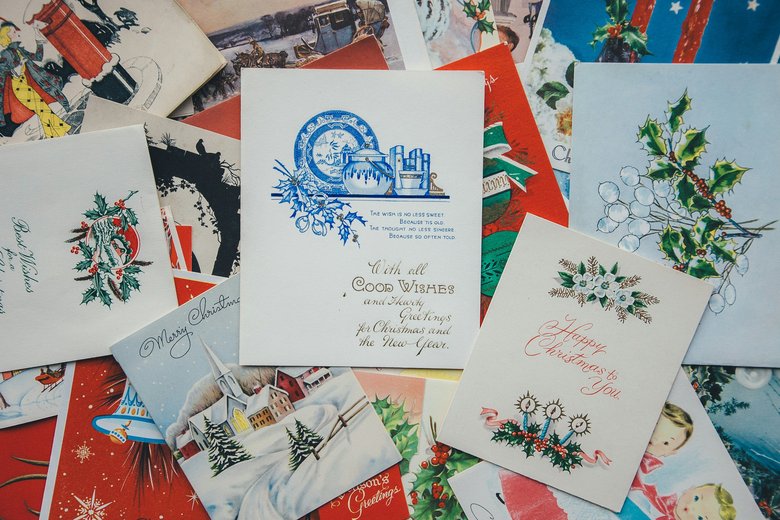
Start by defining your unique style of artwork in a language that your customers will use to find your cards. Think Google keywords and Instagram hashtags. This will help you identify your customers and map out where they buy their cards.
Online research
- Google Search
- Good for finding online marketplaces, local shops and competitor websites.
- Great for identifying competitors in your niche and researching their content strategies.
- Online marketplaces
- Etsy and the like — good for identifying competitors, popular card categories, pricing strategies (single cards or multipacks), postage charges and the commissions you'll have to pay.
- Amazon
- Useful for longer term planning, especially if your designs have mass appeal and you can take advantage of Amazon Prime.
Why go local?
While doing research online is quick and simple, selling online is a different story. The majority of online marketplaces use recommendation algorithms that favour well-known sellers, making it more difficult for new sellers to stand out. It can take months to build an Instagram following that converts to buyers. It might take even longer to get users to visit your new website. So starting locally may be the fastest way for you to get those early sales.
It's true that supermarkets and national card shops make up a huge portion of the offline sales market, and they tend to focus on generic cards bought from wholesale distributors. But don't despair — there are plenty of independent retailers that cater to more niche tastes in greeting cards. So if you're looking to reach a more specific customer base, independent retailers are definitely worth exploring.
Head to your local independent…
- Card shops
- Cafes, restaurants and bars
- Garden centres
- Gift shops
You can check out the type of customers they serve. Find out how much they charge for similar cards to yours. Often you can talk directly with the owner and pitch your designs, get an idea of the best selling themes and seasonal trends. With a bit of luck they may agree to stock your cards when you are ready.
At the end of your market research, you should know
- The potential market for your cards
- Where to sell your cards
- The typical retail price of cards online and in shops
- Commissions you'll need to pay to online marketplaces, and retail pricing to shops
- Quantities you'll need to print to get things started
- What prices you can charge to sell through your chosen retailers
- How to market your designs to stand out from the competition
Do I need a business plan?
It isn't absolutely necessary to have a formal business plan to set up a successful business, but it can be super helpful to have a clear idea of where you are trying to go and how you are going to get there — preferably with some numbers and timescales to measure progress. If you plan to borrow money to get started, then creating a business plan is unavoidable.
Fortunately, these days, with the growth of short run digital printing, free design tools and online sales channels, it is possible to start a greeting card business without breaking the bank.
An example greeting card business plan
Business summary
This business specialises in high quality, original watercolour greeting cards for sale in independent local card shops, cafes and online. We plan to start out with an initial investment of £500 to cover the cost of printing and shipping.
Products and services
We produce a selection of premium greeting cards with original watercolour paintings of flowers, plants, and landscapes. The seasons will be the inspiration for our collections. Each card comes with an envelope and is printed on superior card stock. These can be purchased singly or in a pack of five as a collection. Our cards are blank on the inside and suitable for all occasions.
Market analysis
Due to a trend towards handmade and unique products, the fine art card market is continuing to expand. Given their distinctiveness and higher quality, we expect our cards to be in high demand. We initially plan to sell to independent local card shops and cafes, and as the business expands, we'll also sell online. We anticipate selling 5,000 cards and making £6,000 in profit in the first year. Having established sales channels and reduced printing costs from larger print runs, we anticipate this to grow to 15,000 cards and a profit of £17,000 in year two.
Competition
Our main competition is other more established independent artists. We believe selling locally will be easier for us to establish the business as there is less competition. Online represents a much bigger opportunity and greater competition, but we believe the market is diverse enough to support our unique offering.
Marketing and sales
We plan to use a combination of online and offline marketing strategies to reach our target market. We will use social media, email campaigns, and word of mouth, as well as displaying our cards in shops and cafes to promote our products.
Financials
We plan to start out with a modest initial investment of £500 to cover the cost of printing our first collection, packaging and sales. We anticipate that our sales will increase over time, allowing us to reinvest our profits to expand the business.
Conclusion
We believe that our original artwork and premium quality greeting cards will be well received by our target market. With a modest initial investment and a combination of online and offline marketing strategies, we are confident we can build a sustainable greeting card business.
Printing commercial quality greeting cards
When it comes to getting your greeting cards printed for sale, there are several options depending on the scale of your ambition.
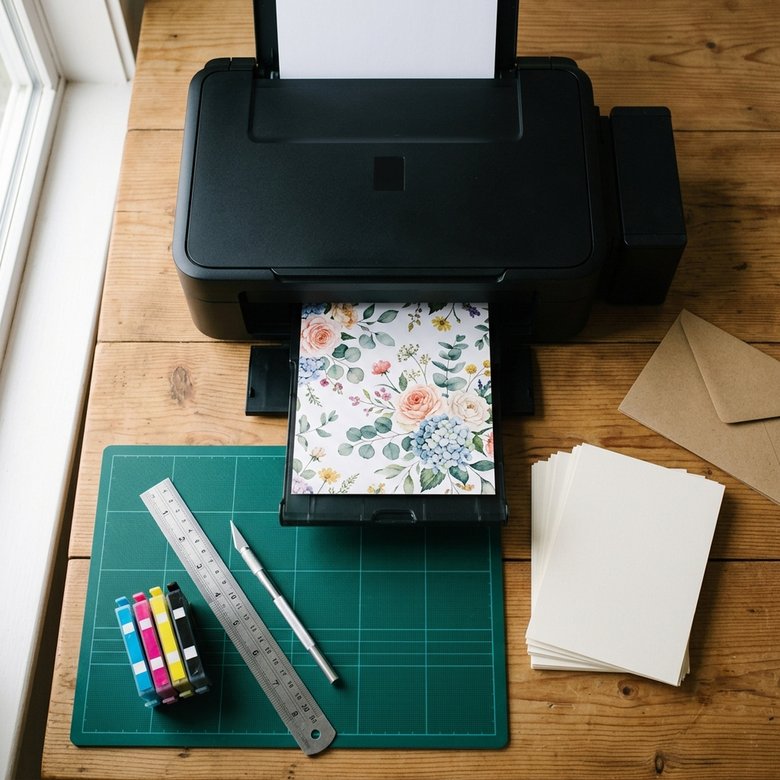 At home: full control, one card at a time.
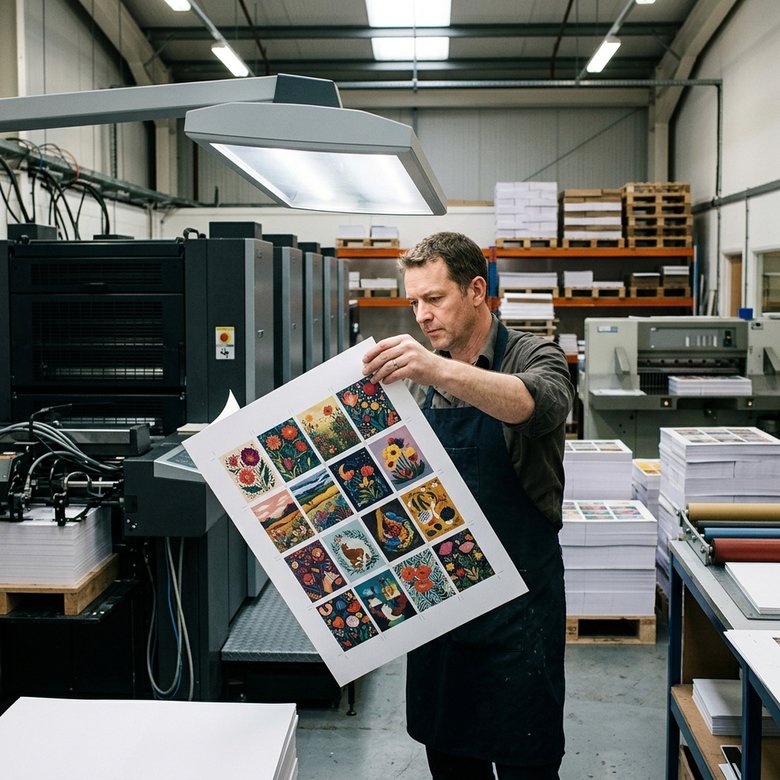 Commercial: many designs ganged on one sheet.
Printing greeting cards at home
There are some benefits to printing your cards at home. You have more control over colour matching (assuming you know what you are doing), card stock and the ability to test print individual cards.
Commercial printing for greeting cards
Once you've factored in the cost of time spent printing at home and compared it to commercial printing costs at higher volumes, outsourcing your printing to the professionals is a no brainer. You will always get a consistent result that your customers can rely on, and you can focus on growing your business.
There are two main types of commercial printing available for greeting cards.
Lithographic vs digital
| Lithographic / offset | Digital | |
|---|---|---|
| How it works | Your design is transferred onto a special plate, which is then used to print all the copies. | State of the art digital printers produce a similar print quality to litho, with no plate involved. |
| Set-up | Each design needs a time consuming set-up. | No complex set-up process. |
| Run length | Great for higher volumes; not viable for smaller print runs. | Very short runs up to 1000s of cards. |
| Best for | High volume publishing. | Most independent greeting card publishers. |
Finding a print partner
With over 8,000 printing companies in the UK, finding your perfect print partner can be more than a little overwhelming. Hopefully by now, you've got a good idea of the type of artwork you want to print, the quantities, and the budget you have.
Things to consider when selecting a print partner
- Card stock — do they offer a good selection suitable for your style of artwork? Professional quality card stock should be at least 300gsm. Higher quality cardstock is more expensive, but you could sell your cards for a bigger profit.
- Sustainability — if it matters to you and your customers, consider the choice of eco-friendly stock available. Does the printer carbon offset their printing operation?
- Card sizes — do they offer standard UK sizes which fit your artwork?
- Print ready artwork — does the printer require you to upload finished print ready artwork, or can you upload your images and create the card on their website?
- File formats — what image file types does the printer accept? Do they need to be in CMYK, or can you upload standard RGB from your computer or smartphone?
- Print proof — can you download a proof of the final print PDF, preferably in a converted CMYK approximation, so you can check the colour matching before printing?
- Artwork review — do they check your artwork for correct bleed alignment and image quality, or is this entirely your responsibility?
- Pricing — what are their shortest print runs for any one design, and does this fit your budgeted costs? Most printers offer significant discounts as you print more.
- Multi design discounts — some printers offer a discount across multiple designs, which is great for testing designs and offering multipacks without printing hundreds of the same card.
- Shipping costs and turnaround times — how long do they take to print and ship an order? We recommend choosing a tracked courier so your cards don't go missing.
Sample packs
Having identified a short list of potential print partners, it's time to see their work. In an ideal world, you might be able to get a single print of your actual design for you to check the quality of the final result. Unfortunately most print shops these days are not set up to print individual cards and will require you to print a minimum quantity. Your next best option is to request a sample pack containing all the different cardstock they offer, ideally printed with a variety of artwork and colours. This should help you choose the printer and the perfect cardstock for your artwork.
Your first print order
If you are new to commercial printing, placing your first order can be a bit scary. If your chosen printer requires you to upload your artwork in their template, CMYK colour profile and accepted file format, this is relatively easy to do — providing you have the right image editing software (e.g. Photoshop or InDesign) and a bit of know-how. Usually the printer's website will allow you to download a blank template in the correct size for your card. You can upload this to your image editor and use it as a guide to create the print ready artwork.
Alternatively, you can opt to use a printer that offers a card designer on their website. So you don't need to spend hours learning to use some expensive software. You can just upload a photo or scan of your artwork and finish your design directly on the print website. The card maker will create the finished document for print in the correct format and produce a proof for you to check.
For your first print run with a new printer, it is better to order the minimum quantity (e.g. 10–25 cards per design) so you can check quality and test which of your designs are going to sell. If the printer offers a volume discount across multiple designs, you'll be able to test print a selection of your artwork while keeping your costs within budget.
Marketing and sales
If you've done the market research mentioned earlier, you should already have a pretty good idea of how and where you are going to sell your cards. As a quick recap, here's a list of ideas to get you started.
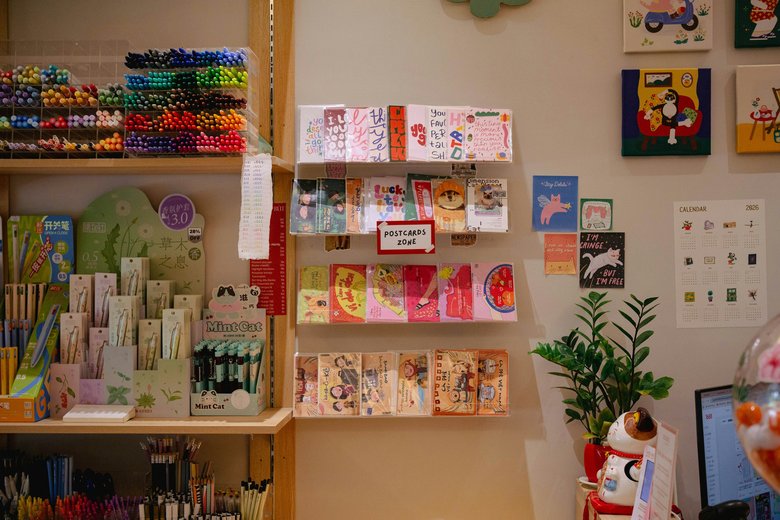
- Local card shops, cafes and bars
- Connect with your customers. Often the quickest way to make that first sale. They do all the marketing, and you save on packaging and shipping.
- Social media
- Instagram and Facebook can be cost free, but it will take time to build a customer base.
- Online marketplaces
- Etsy and the like are easy to get started with, but it can be hard to get visibility as a new seller.
- Your own website
- Best for having control over your brand. Can require a subscription to a hosting service, and it's hard to get visibility without paid advertising.
- Email marketing
- The best way to sell more to existing and potential customers. Offer a regular update on your latest designs and offers.
- The back of your cards
- Include your social media, website and email details on the back of your cards. It's the best and cheapest advertising space you have.
Good luck with your card business
Starting a greeting card business might seem like a lot of hard work, and it can be. A sustainable card business does require some planning and an ongoing commitment. But with easy access to design tools, commercial printing and a thriving UK card market, this is a business with a relatively low barrier to entry for anyone with a creative flair.
Ultimately, it is a fantastic way to share your passion with others and bring a little joy to anyone lucky to receive one of your creations.
If you have any questions about anything in this article, or need some help or advice, please do drop an email to hello@crearty.io. We'd love to hear from you.
Ready to print your first cards?
Upload a scan or a photo, finish the design in the Studio, and we handle the CMYK, the bleed and the board.